248-344-9700
39555 Orchard Hill Place, Suite 215, Novi, MI 48375


Can Grandparents Get Visitation or Custody in Michigan?
 Grandparents play a special role in the lives of their grandchildren. However, this relationship typically isn’t recognized with formal legal rights. If you wish to petition for custody or visitation as a grandparent, you should know when you can ask the court to recognize that relationship.
At Elkouri Heath, PLC, our Northville, MI family law attorneys have over 20 years of experience representing clients throughout southeastern Michigan. If you have any questions about custody rights, don’t hesitate to contact us. We can review your situation, inform you of your rights, and help you pursue the best course of action.
Grandparent Visitation Laws in Michigan
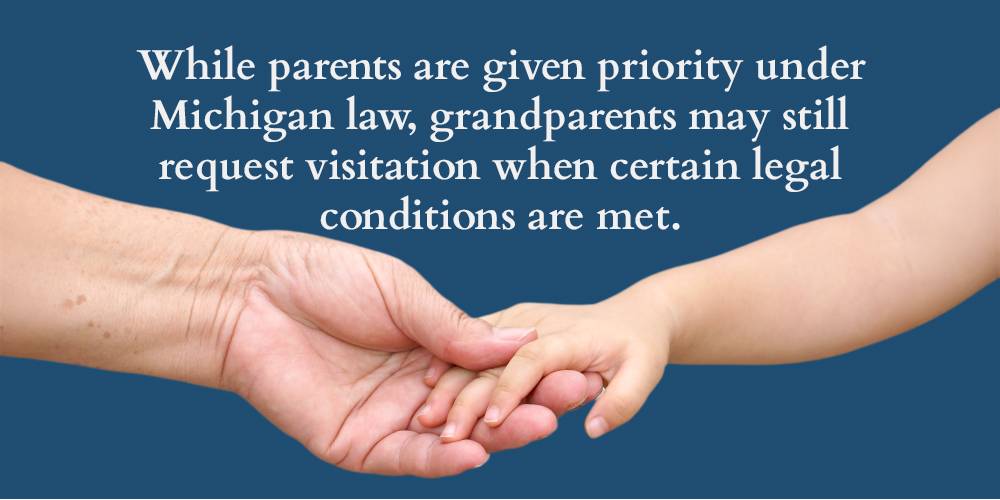
In Michigan, grandparents do not have automatic visitation rights. The law supports allowing parents to decide who spends time with their children. Grandparents may request court-ordered visitation only in specific situations. These include cases where a parent has died, the child’s parents were never married, or a divorce or separation has already occurred. Even then, the court looks closely at whether visitation serves the child’s best interests and does not interfere with a parent’s rights.
Michigan law requires the court to balance family relationships with parental authority (MCL 722.27b), and governs limited circumstances only. This means a grandparent must show more than love or good intentions. The request must be grounded in the child’s well-being.
Understanding Third-Party Custody Claims in Michigan
Custody claims by grandparents fall under a broader category called third-party custody. These cases are different from standard custody disputes between parents. Michigan law strongly favors a child remaining with a parent. To overcome that preference, a grandparent must meet a higher legal standard.
Third-party claims usually arise when a child’s living situation becomes unstable or unsafe. Examples include substance abuse, neglect, abandonment, or long-term absence by a parent. In these cases, a grandparent may step in to provide structure and care.
The court does not treat grandparents as equals to parents at the start. Instead, grandparents must first show that placing the child with a parent would cause harm. Only after that threshold is met will the court compare custody options using best-interest factors. This step-by-step approach reflects how seriously Michigan courts treat parental rights.
When Can Grandparents Seek Full Custody in Michigan?
Grandparents may seek full custody when they believe a child is at risk. These cases often involve serious concerns. Courts look for evidence that a parent cannot provide proper care. Temporary struggles usually are not enough. The issue must be ongoing or severe.
In some cases, grandparents have already been caring for the child for months or years. That existing caregiving role can matter, especially if the child depends on the grandparent for daily needs.
Emergency custody may be requested if a child faces immediate danger. However, emergency orders are short-term. A full custody case still requires evidence, testimony, and careful review. The process can feel overwhelming, but in any case, the court wants to place the child in a safe and stable home.
Can Parents Object to Grandparent Custody or Visitation?
Parents have the right to object. In fact, parental objections carry significant weight in Michigan courts. Judges assume that fit parents act in their child’s best interests. A grandparent must overcome that assumption with facts, not feelings.
Parents may argue that visitation disrupts routines, creates conflict, or undermines discipline. In custody cases, the court will hear from both sides. Interested parties may present evidence of housing, employment, treatment progress, or family support. Witness statements can help support either side's claims.
Michigan courts presume that parents should have custody rights first. That does not mean grandparents never succeed. However, it does mean the burden of proof rests with them. Clear records, credible witnesses, and a consistent history of caregiving can make a difference. Each case turns on its own facts, and outcomes can vary widely.
What Do Custody Rights Include in Michigan?
Custody in Michigan is divided into two main components. Knowing the difference is important for grandparents seeking custody rights.
Physical custody refers to where the child lives on a day-to-day basis. The person with physical custody is responsible for daily care. This includes meals, school attendance, bedtime routines, and transportation. When grandparents seek physical custody, they are asking the court to allow the child to live with them full-time or most of the time.
Legal custody is about decision-making authority. A person with legal custody has the right to make major decisions for the child. These decisions often involve education, medical care, mental health treatment, and religious upbringing. Legal custody can be shared, even when physical custody is not.
In some cases, grandparents may seek only physical custody while parents retain legal custody. In other situations, a grandparent may request both. The court decides what arrangement best supports the child’s long-term needs.
What Do Courts Consider in 2026 Custody Cases?
Michigan courts refer to the child’s best interests to make custody decisions. This standard looks beyond legal labels and focuses on daily life. Judges consider where the child feels secure, supported, and understood.
Key factors include the emotional bond between the child and each adult, the ability to provide guidance, and the stability of the home. The court will also consider the willingness of each party to foster close family relationships. A history of caregiving carries weight, especially when it has been consistent.
Judges pay close attention to conflict. High-conflict situations can harm children. A grandparent who shows flexibility and respect for parental roles may appear more credible. Likewise, a parent who demonstrates growth and accountability may strengthen his or her position.
The child’s voice may be considered, depending on age and maturity. Ultimately, the judge decides based on the full picture, not a single issue.
Contact a Northville, MI Child Custody Attorney
At Elkouri Heath, PLC, we help families in southeastern Michigan understand their options. Whether you are a grandparent seeking time with a grandchild or a parent responding to a request, guidance matters. Call 248-344-9700 to speak with an Oakland County, MI child custody lawyer today. We offer free consultations, so feel free to reach out.





| 39555 Orchard Hill Place, Suite 215, Novi, MI 48375 | |
| 248-344-9700 |



Contact Our Firm
 The use of the Internet or this form for communication with the firm or any individual member of the firm does not establish an attorney-client relationship. Confidential or time-sensitive information should not be sent through this form.
I have read and understand the Disclaimer and Privacy Policy.